
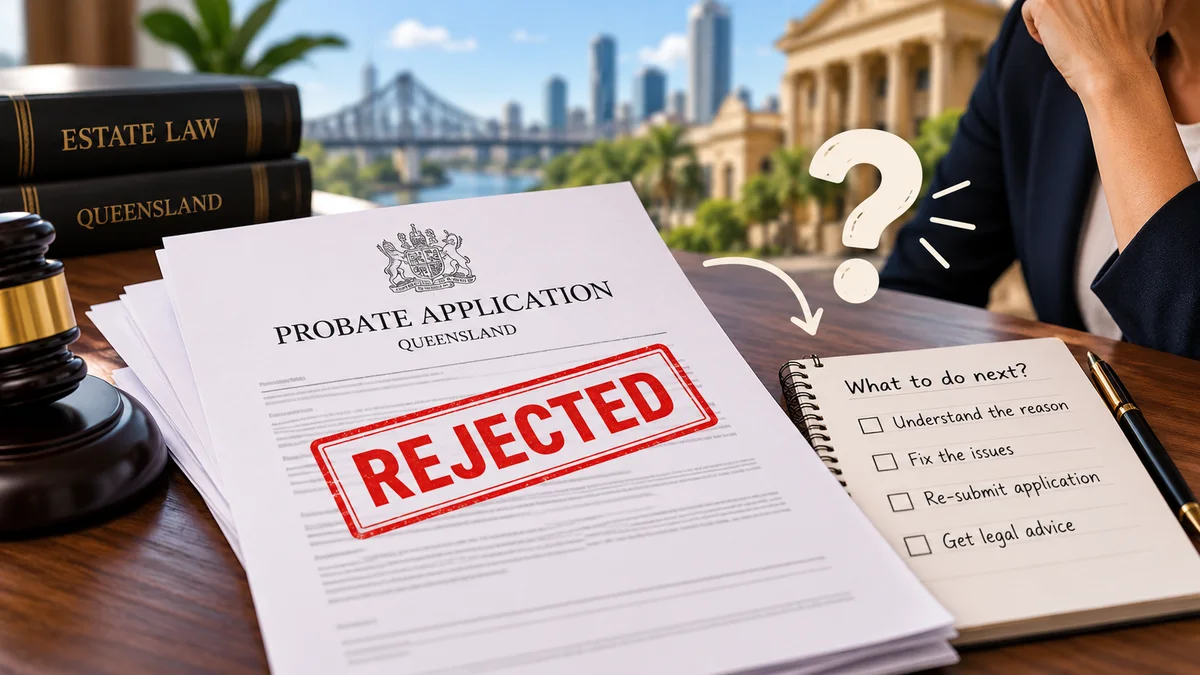
You lodge the application, expect the estate to move forward, and then receive a notice from the Supreme Court asking for more information. For an executor already handling a death, property and financial matters, an unexpected court request can add another layer of work.
A returned probate application does not necessarily mean the estate is delayed or blocked; in Queensland, the court may issue a requisition if an application does not meet the relevant requirements or needs further evidence before it can consider the grant, which can impact estate administration timelines.
The next step depends on what the court has identified. A missing document may require a simple correction, while an issue involving the will, executor or another person’s objection can require a more detailed response. If you need help understanding the process, a probate lawyer Sunshine Coast can explain the issue and the options available.
Why Probate Applications Get Rejected
A Probate application must provide the Supreme Court with sufficient evidence to establish the deceased’s death, the will relied upon and the applicant’s entitlement to the grant.
Queensland Courts list the application, original will or codicil, supporting affidavit, certified death certificate and evidence relating to publication and service among the documents required for an application. After reviewing the material, the registry can request additional information or affidavits.
Common problems include:
- incomplete or incorrect application documents;
- information that does not match across documents;
- missing supporting evidence;
- problems with the original will or codicil;
- questions about the applicant’s entitlement; and
- other issues identified during the registry’s review.
Queensland Courts use the term requisition where an application does not comply with the requirements and further information or documents are needed.
That means the notice itself matters. An executor should first understand whether the court wants a correction, additional evidence, or a response to a more substantial issue, which helps build confidence in managing estate administration.
Common Application Errors To Watch
A Probate application can encounter difficulties when the documents lodged do not properly establish the facts relied upon by the applicant.
The original will require particular care. Queensland Courts state that the original will or codicil should not be marked or attached to anything, including staples, pins or clips. A damaged will may require additional evidence and a specific affidavit dealing with its condition.
The supporting affidavit is also important. Queensland’s court rules require evidence addressing matters such as the deceased’s death, the will being relied upon and the applicant’s position as executor.
Alterations, erasures or references to other documents can create another issue. The court rules contain specific requirements for these circumstances, so an unusual feature of a will should not be ignored during filing.
Using an old application as a template can also create avoidable problems if the current Queensland forms or requirements differ. The safer approach is to check the current court requirements before preparing the documents.
Understanding A Court Requisition
When a Probate requisition arrives, read each request separately before preparing a response.
A requisition identifies information, documents or evidence the registry requires before the application can progress. The notice may therefore contain several separate issues, each requiring its own response.
Start by identifying:
- The issue raised – determine exactly what the registry says is missing, inconsistent or unclear.
- The material required – check whether the court wants a document, affidavit, explanation or other evidence.
- The response date – note any deadline stated in the requisition and allow time to prepare the material properly.
Compare the request with the documents already lodged. This can show whether the problem is a missing item or whether the court is asking for evidence about something more significant.
If the requisition concerns the will’s execution, alterations, damage to the document, or the applicant’s entitlement, the response may involve legal remedies such as applying for a variation or seeking legal advice to address complex issues.
When A New Application Is Necessary
An application should not automatically be lodged again after a requisition. First establish whether the existing application can be corrected or supported with the additional material requested. The appropriate type of grant can also depend on what has happened to the executor or will.
For example, probate concerns the executor named or identified in the will. If that executor cannot or will not act, the circumstances may instead require an application for letters of administration with the will. Queensland’s rules set out separate requirements for that process.
A caveat creates a different problem. A person with an interest in an estate can lodge a caveat in appropriate circumstances, preventing the grant from being made while the objection is dealt with.
That is not the same as an incomplete form. An executor should establish whether the issue is administrative, concerns the type of grant, or involves an objection before deciding what to file next.
What To Do After Rejection
Once you receive a Probate requisition, keep the original application and related documents together. Then work through the court’s request against the material already lodged.
| Court issue | What you should check |
| Missing document | Check which document the court has requested and whether it was omitted from the original application. |
| Incorrect information | Compare names, dates and other details across the application and supporting documents. |
| Further evidence requested | Identify the specific fact the court wants established and provide the requested evidence. |
| Will-related issue | Check whether the concern involves the will’s condition, execution, alteration or another feature. |
| Executor issue | Check whether the person applying is entitled to seek the particular grant. |
| Objection or caveat | Do not treat it as a simple paperwork error; check what court process applies. |
For a straightforward missing document, the correction may be relatively simple. However, a request concerning the validity, execution or condition of a will can require more detailed evidence.
Before filing a response, ask what fact the court needs established. That question can help you identify the evidence or explanation required.
How To Prevent Further Delays
Preparing a Probate application carefully can reduce problems caused by incomplete or inconsistent information. Use the current Queensland Courts forms and instructions rather than relying solely on an old application or generic online checklist. You can check the current requirements through the Queensland Courts guide to applying for a grant of administration before preparing your documents. Then confirm that you have included each required supporting document and exhibit.
Pay particular attention to the original will. Proper handling, such as avoiding staples, clips, or attachments, reassures the executor that they are effectively preventing delays and maintaining control over estate administration.
Keep copies of the application, affidavits, supporting documents and correspondence with the court. These records provide a clear reference if the registry later requests clarification.
For Sunshine Coast executors, this organisation can also help when estate administration involves property, financial accounts and communication with beneficiaries at the same time.
When Legal Advice Makes Sense
Not every requisition requires extensive legal assistance. If the registry asks for a straightforward missing document, the notice may make the required correction clear.
The situation is different where the issue concerns the substance or history of the will, the person entitled to apply or an objection to the grant.
Legal advice about Probate may be particularly relevant where there is:
- a damaged, altered or unusual will;
- more than one testamentary document;
- an executor who has died, renounced or cannot act;
- uncertainty about how the will was executed or witnessed;
- a caveat or other objection; or
- uncertainty about the appropriate type of grant.
Queensland’s court rules include specific provisions on execution, alterations, documents referred to in wills, and the priority of applicants.
In these circumstances, the important question is not simply how to complete another form. It is whether the proposed response deals with the legal issue identified by the court.
What Happens After The Grant
Once Probate is granted, the executor can move forward with administering the estate under the authority of the grant.
The remaining work may include identifying and collecting estate assets, dealing with debts and liabilities, managing or transferring property and distributing the estate according to the will.
The grant does not remove the executor’s ongoing responsibilities. Estate administration may continue for some time, particularly where property needs to be sold, assets are difficult to locate, or beneficiaries have competing interests.
This is why resolving the court’s requisition matters. Until the grant is dealt with, an executor may be unable to take steps needed to administer the estate.
Conclusion
A Probate application returned by the Queensland Supreme Court does not automatically mean the estate cannot proceed. The executor needs to identify the precise issue raised by the registry and determine whether it requires corrected documents, further evidence, a different grant or action concerning an objection.
If you have received a requisition or your application has not progressed as expected, contact Clear Path Lawyers to discuss your circumstances. Legal advice can help you understand the issue before you submit another application or response.
Frequently Asked Questions
Is a probate requisition the same as rejection?
Not necessarily. A requisition usually identifies information, documents or evidence the court requires before an application can proceed. Read the notice carefully to identify the specific issue and required response.
What if the original will is damaged?
A damaged will may require additional evidence before the court can decide the application. Queensland Courts provides a specific affidavit for a damaged will or codicil, so the document’s condition should be addressed.
What happens if someone files a caveat?
A caveat can prevent the grant from being made while the objection is dealt with. The person who lodged it must follow the relevant court process, and the application cannot simply proceed as though no objection exists.
Does every Queensland estate need probate?
No. Probate is one form of grant available in Queensland. Depending on the circumstances, an estate may instead require a grant of probate with a will or letters of administration where there is no will.